Blog / / 5 min read
I put a Noctua in my Traeger
The fan in my Traeger Ironwood 885 died, so I replaced it with a Noctua industrialPPC. Because of course I did.
Not everything with a fan in my house is a server. Some of it is a smoker.
I’ve got a Traeger Ironwood 885, and it turns out a pellet grill has a lot in common with a homelab. There’s a controller board, there’s wiring, and there’s a fan that has a really important job. So when that fan died, of course I replaced it with a Noctua.
How a pellet grill actually works
If you’ve never looked inside one, a pellet grill is a pretty simple machine:
The hopper holds the pellets, the auger feeds them into the firepot, and the fan blows air into the firepot so the pellets actually burn. The controller runs the auger and the fan to hold whatever temperature you set. No air, no fire. That fan matters.
The old fan
My stock fan died. And since that fan is what keeps the fire going, a dead fan means a grill that can’t hold a fire, which means no cook.
Here’s the old one after it came out. It’s an NMB 12V fan, and it was pretty much coated in a layer of dust and ash.
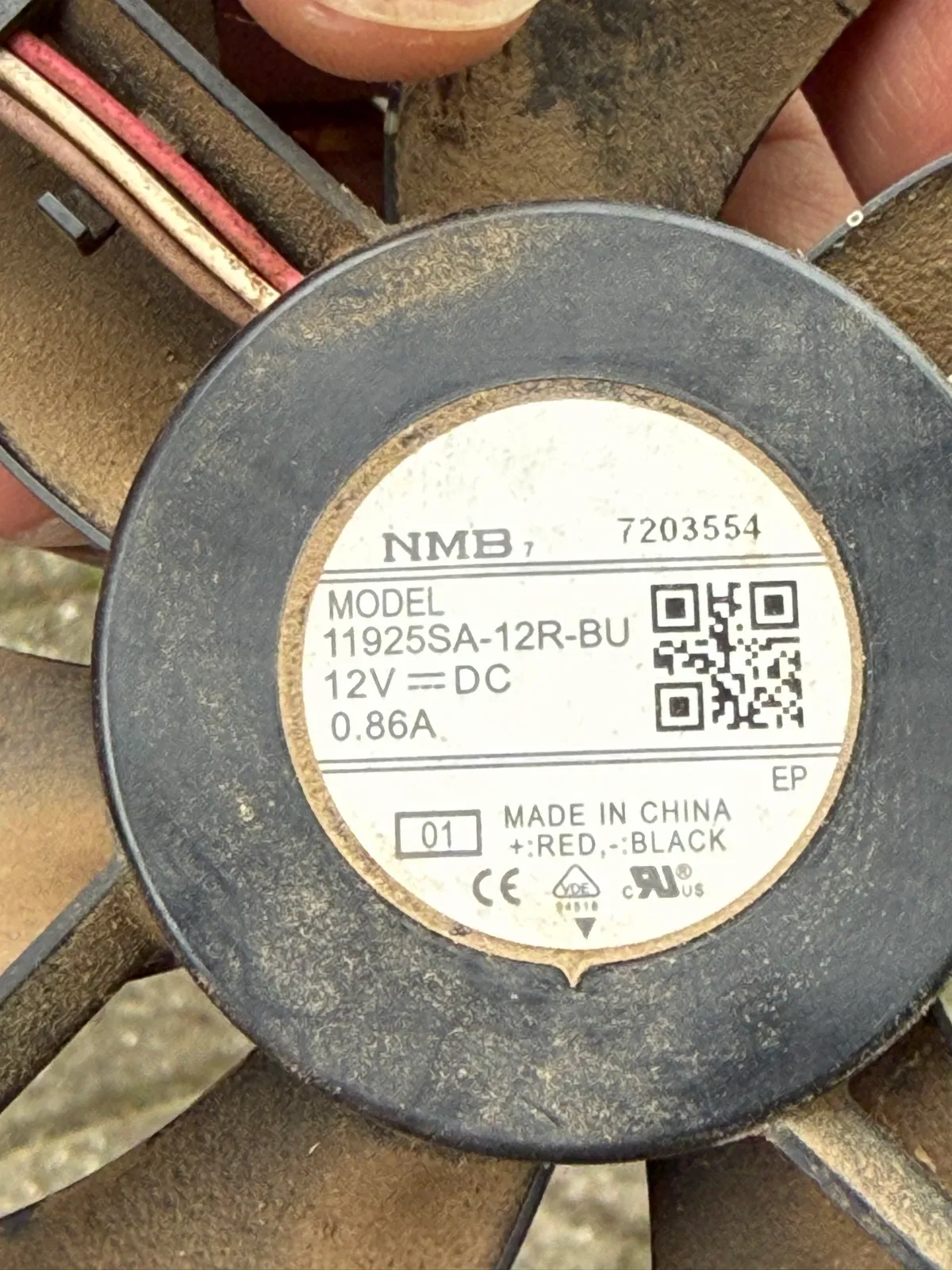
The dead stock fan. NMB, 12V, rated for 0.86A, and very much used.
The Noctua
For the replacement I went with Noctua’s NF-F12 industrialPPC-3000 PWM. The industrialPPC line is Noctua’s heavy duty stuff, made for industrial gear instead of quiet PCs. Here’s how the 120mm industrialPPC options compare:
| Option | Voltage | Speed | Notes |
|---|---|---|---|
| NF-F12 industrialPPC-2000 | 12V | 2,000 RPM | Right voltage, slower and quieter |
| NF-F12 industrialPPC-3000 PWM | 12V | 3,000 RPM | Right voltage, the most airflow and pressure. The one I used. |
| NF-F12 industrialPPC-24V-3000 IP67 | 24V | 3,000 RPM | Fully sealed, but 24V, and the grill runs 12V |
The 3000 is a 120mm, 12V fan that tops out around 186 m³/h of airflow (about 110 CFM) with a lot of static pressure. It’s also rated IP52, so it has some protection against dust and water, which is nice for something living in a grill. It’s loud at full speed, around 43.5 dB(A), but it’s a smoker, not a bedroom PC.
The swap itself is about what you’d expect if you’ve ever replaced a fan in a PC. Get to the fan, unplug it, unscrew it, put the new one in the same spot, and wire it up.
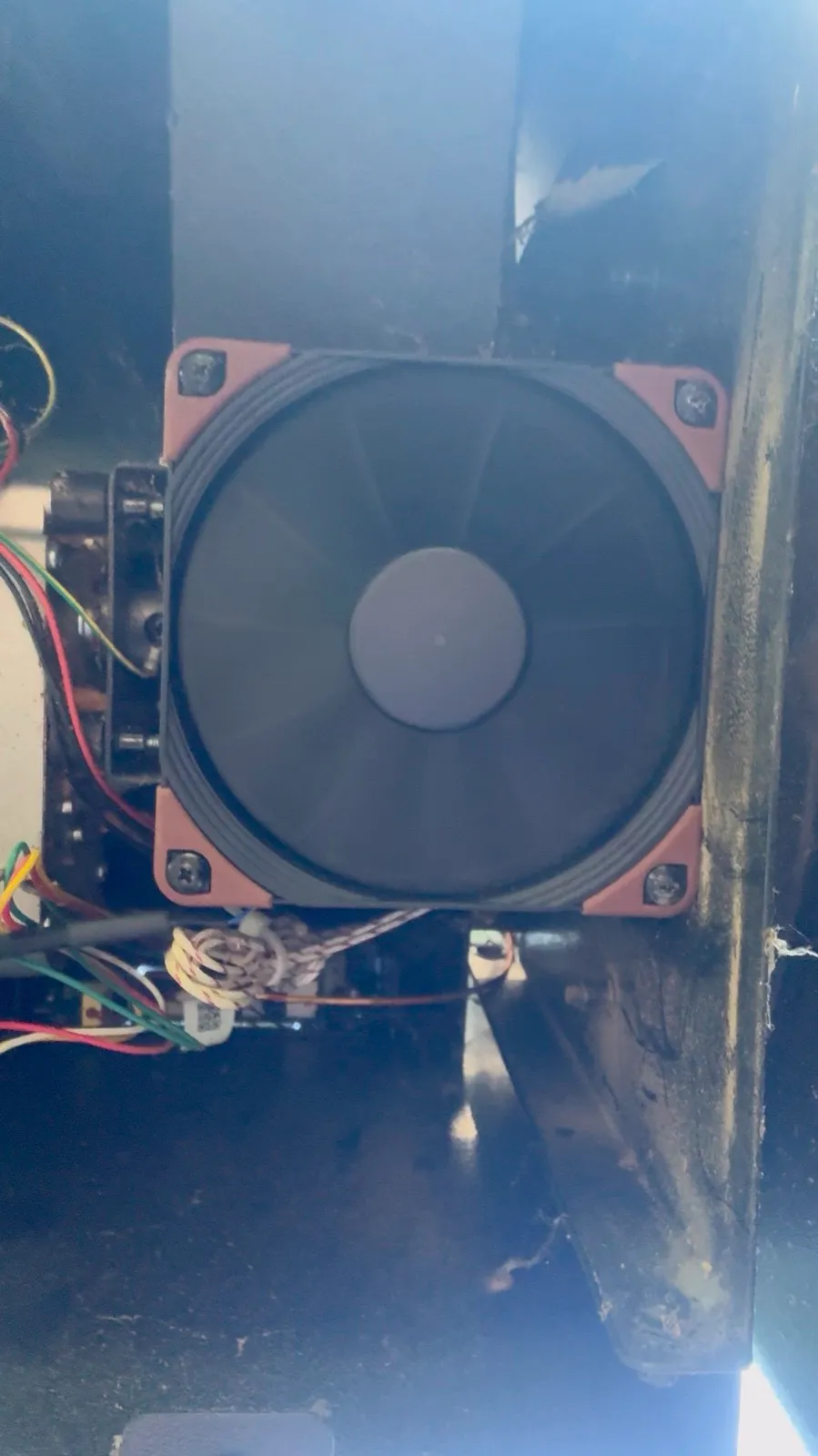
The Noctua, installed next to the controller. A computer fan has no business being inside a grill, and I love it.
Does it still make fire?
The only test that matters: fire it up and look at the firepot.
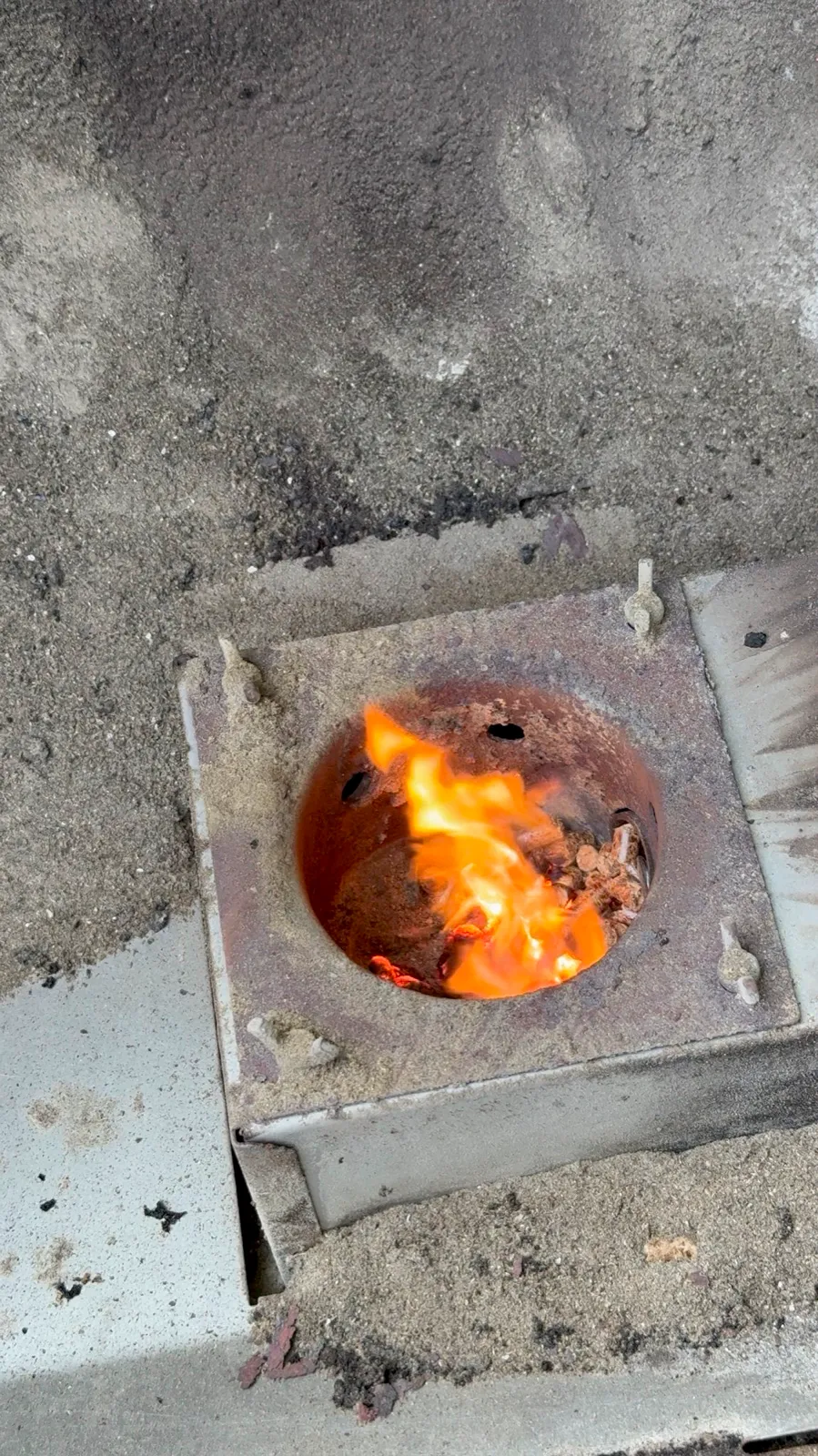
Firepot lit, pellets burning. It works.
Pellets going in, air coming in, fire happening. That’s the whole job, and the Noctua is doing it.
Is this a good idea?
Honestly, it’s a fun one. A few things worth knowing if you’re thinking about doing the same:
- This fan feeds the fire. It’s not just cooling something. Too little air and your fire struggles, so whatever you put in needs to keep up with what the grill expects. That’s why I went with a 3000 RPM industrial fan and not a quiet one.
- Check the voltage and the plug. The stock fan is 12V, so the replacement needs to be too. Watch out for the 24V industrial models, they look the same. And you’ll need to get it wired into the same connector.
- It’s your grill. Opening it up and swapping parts is on you, and it might not be something the manufacturer is thrilled about.
After all the fans in the homelab, swapping one in a grill felt like the natural next step. Next cook, it’s back to smoking things instead of benchmarking them.